Science
Silk needles deliver vaccines to small rainbow trout underwater
Researchers at MIT and the USDA have tested water-resistant microneedles on rainbow trout weighing just 1–2 grams, according to MIT. The technology could allow earlier vaccination, but the information reported is not enough to judge how well it protects against disease.
2 min read
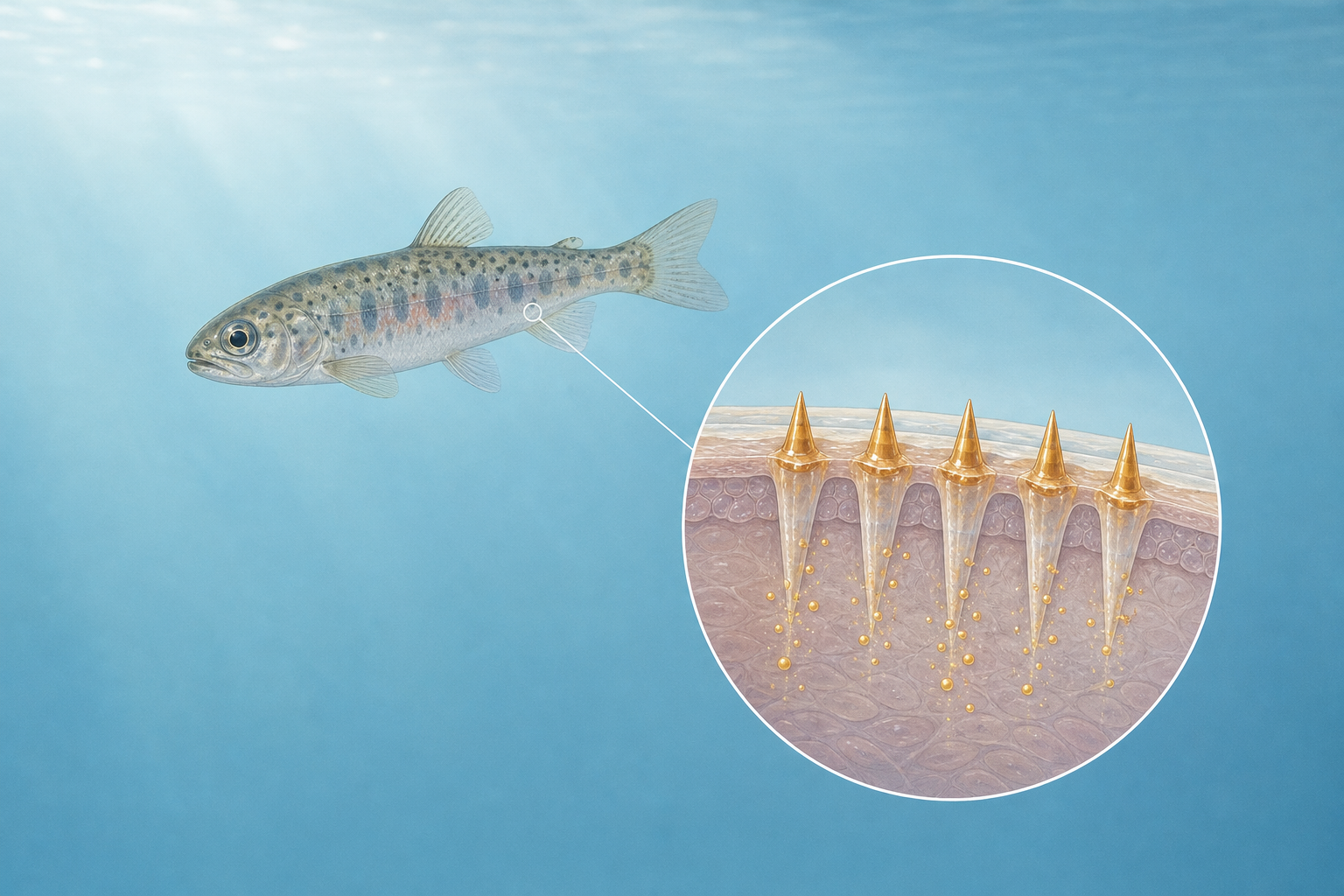
The potential benefit is being able to vaccinate fish earlier in life. According to Gregory Wiens, a researcher at the US Department of Agriculture, USDA, and a co-author of the study, conventional needle vaccination works poorly for rainbow trout until they weigh around 30 grams. The research team says the new microneedles can deliver vaccine material underwater into fish weighing just 1–2 grams. This is not a general size threshold for fish vaccination, but Wiens’s description of the problem in rainbow trout farming. [1]
Current methods involve different trade-offs. According to MIT’s account, treatment through feed does not reliably reach every fish, while bath treatment requires larger quantities of the treatment agent. For conventional injections, fish are anaesthetised and taken out of the water to be vaccinated. The researchers hope microneedles will simplify handling, but the news report contains no measured comparisons showing reduced stress, shorter working times or fewer needlestick injuries among staff. [1]
The technical obstacle has been the water itself. The research team had previously developed silk-based microneedles for plants, but the first versions for fish softened or dissolved too quickly. Their contents leaked out before the needles could penetrate the skin. The solution MIT now describes is a thin layer of shellac: a resin also used in food coatings and medicines. The layer acts as a moisture barrier, protecting the silk before application. [1]
The needles are designed to penetrate the wet skin to a shallow depth, stay in place while the fish swims and release their contents before the material breaks down. According to MIT, the team has demonstrated the delivery of different types of vaccine material and developed versions with varying water resistance and release rates. The work is described in a study that the university says has been published in the journal ACS Nano. [1]
It is important to distinguish that delivery from demonstrated protection against disease. Vaccine material entering the fish, the immune system responding and the fish subsequently coping better with an infection are separate steps. The available news reports do not provide enough results to assess the latter two. They therefore do not show how well the method protects against disease or whether it is safer than conventional injections. [1] [2]
The trade publication Salmon Business, which reports on MIT’s work rather than conducting its own experimental review, also stresses that the trials concern rainbow trout. The results establish neither performance in commercial operation nor efficacy in Atlantic salmon. The researchers themselves say further development is needed before use at fish-farm scale. [1] [2]
For fish farmers, two crucial questions therefore remain: whether the technology can provide reliable disease protection in small fish, and how the needles can be applied so that every fish receives the intended dose on a large farm. The prospect of vaccinating fish earlier is interesting – but its value depends on both protection and practical handling working.